

Steve and I grew up in the 80s! We experienced the height of fashion, music, and big hair! We’re part of the last generation that grew up without internet or social media. In 2026 online feeds are full of beautiful people going to beautiful places. There’s a noticeable absence of double chins and muffin tops. Many things online are filtered …our looks, our homes, our words. We carefully cut, crop, and edit our online presence to such extremes that we can, in effect, delete ourselves.
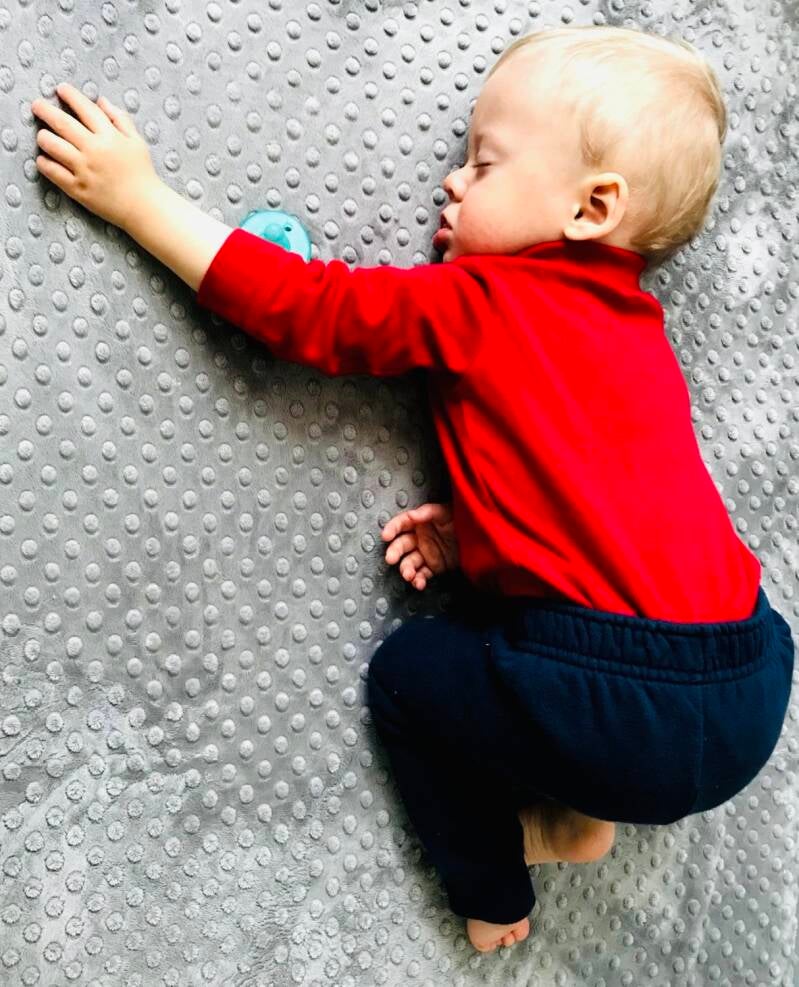
I’m writing about the moment I realized I was guilty of doing this very thing. I remember Henry was still tiny. He was wearing a bright red long-sleeved onesie and dark blue sweatpants. He was crawling and he discovered our big yoga ball. I clicked on my camera to capture his wide-eyed exploration, and he had a drop seizure. He recovered quickly and then he had another drop seizure. I stopped the camera, scooped him up, and snuggled him. Later that evening I was thinking about how special it was that he got excited about the ball. I started editing out the seizures and writing a quick post about his discovery when I thought to myself, this video isn’t real. In fact, I had been editing seizures out of every post. That wasn’t Henry. That wasn’t his life. Why was I editing Henry? It wasn’t because I needed people to see us as a perfect family. I realized, I was editing out the hard parts of Henry’s life to protect others. I didn’t want family and friends to feel what I felt when I saw him struggling. I didn’t want to make anyone uncomfortable. That was the moment I decided if I was going to share a peek at our life, it was going to be genuine.
That leads me to the question I’m sure everyone who follows us has been silently asking themselves…why are you recording/sharing his seizures? I’m glad you asked. I would have been asking this too. There are several reasons I believe sharing Henry’s reality is important:
Between the ages of 10 months and 5 years old, it was nearly impossible to capture a moment with Henry that did not include a seizure. When we say Henry had thousands of seizures every month, that is not hyperbole or exaggeration. If I wanted any video/picture memories of our sweet boy’s childhood, seizures would be a part of them. When your childhood is spent in a hospital or emergency room, that is where the memories take place. My camera will always be filled with memories from each stage and phase of Henry’s life.
I’m about to do something cringy…offer unsolicited advice. If I could give advice to a parent who is caring for a child with an undiagnosed illness, I would encourage them to record everything concerning and share it with the doctor. Diagnosis/treatments come quicker when a doctor doesn’t have to become a detective. Video documentation takes the guesswork out of everything. One short video clip is the reason Henry had his first EEG rather than being discharged from the ER. Recording all of his involuntary activity allowed doctors to teach us what types of seizures he was experiencing. (Medication and care for each type of seizure is different.) Letting the camera run during an active seizure gave us an accurate timer for the length of his seizures. Would you believe pictures even led to surgery? When Henry turned one, he was having some unusual symptoms that would flare up and disappear almost daily. I took pictures because I knew the symptoms may not be flaring up during his dr.'s appointment. As expected, he was not having a flare-up at his appt, but the picture documentation confirmed he needed surgery. Thorough documentation meant getting Henry the help and support he needed as quickly as possible.
Reading about a seizure gives one knowledge, but it also creates a comfortably detached distance between a reader and the human experiencing seizures. When you take the human out of the equation, you also remove the resulting empathy. Spreading awareness, educating, and advocating are more powerful when those you’re trying to reach have an opportunity to witness seizures, autistic traits, or real-life scenarios. My goal is to soften hearts towards the special needs community, even when that goes hand in hand with sharing things that make people uncomfortable.
Finally, I’m proud of Henry’s journey. I refuse to hide him or edit him into anything other than the spectacular little boy that he is. Each chipped tooth is a battle he overcame. His wobbly gait is evidence of a stubborn determination to overcome immobility. Every meaningful sound is an indicator of the hours he’s spent working on communication. If “wonderfully made” excludes a stimming 7 year old, then we’ve misunderstood the Maker.
Six years ago, I decided to post the video of Henry playing with his giant yoga ball, seizures and all. Today, I’m still not editing out the reminders of his survival, determination, or resilience.
“When Jesus appeared to His disciples, He held out His hands. He pointed to His side. He carried the scars of His crucifixion into eternity. The Savior of the Universe chose to keep His wounds. He did not hide them. He did not cover them up to make His followers more comfortable. He wore them as the ultimate proof of His identity, His sacrifice, and His unimaginable love for us. If Jesus Christ did not hide His scars, you do not have to hide yours.”
~James Wade, “No Compromise”
Add comment
Comments