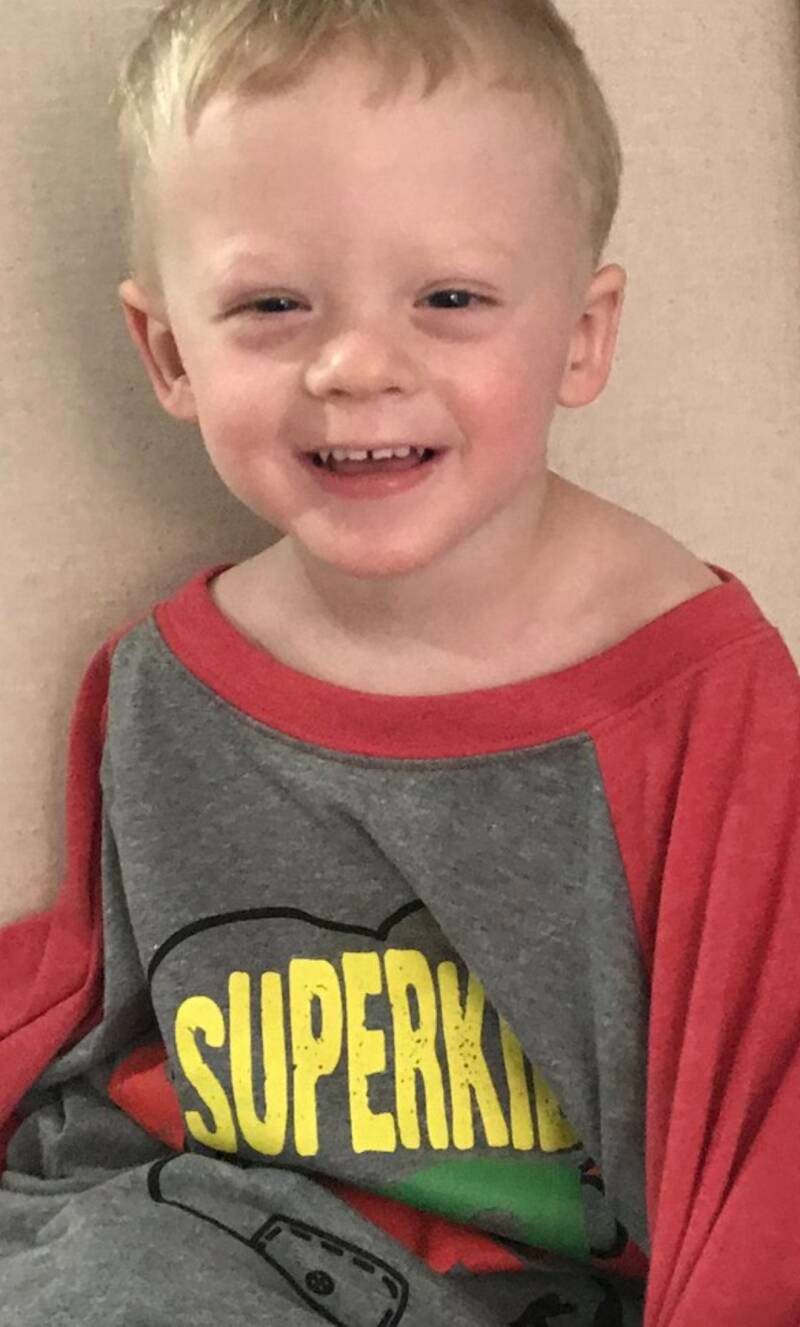

A new beginning. A new season. Turning the page. There are a lot of phrases we assign to significant passages of time. I never notice when a chunk of time is important enough to warrant its own title. But today I have hindsight and recognize this is the point in Henry's story where everything began to shift, marking the start of another new chapter in his journey.
One of Henry’s doctors suggested that I keep a journal tracking his seizures. There were days Henry had more seizures than could be counted. Journaling seizures was the meticulous documentation of Henry’s regression. Each tally mark represented a seizure that took our little boy further away from us. There were no giggles, smiles, sounds, or eye contact. He became a shell, a body that housed an absence of Henry’s childhood spirit. There were no patterns to be found in my journal data because he had seizures 24 hours a day and everything was a trigger. Three notebooks of journals later and we still didn’t have answers.
Answers came one month after Henry’s second birthday. We heard about a children’s hospital that specialized in severe forms of epilepsy. Steve reached out to the hospital and learned about a diagnostic program that sounded too good to be true. The hospital admitted 8 children and devoted one doctor to those 8 children for 5 days. The ratios were 8 children to 1 doctor and 2 children to 1 nurse. Throughout that 5-day period, doctors would run tests, adjust meds, make a diagnosis, and we would have a working plan of care in place before we were discharged. We were also able to be admitted to the hospital as a family during COVID. There would be two of us comforting Henry, sharing his medical history, and mentally bookmarking information that the other might forget. We could talk through our thoughts and support each other in person. I needed my much better half on this visit, and God knew it. The only snag, for us, was that the hospital was an 8 hour round trip from our home. It sounds like a no-brainer, but Henry had become too fragile to ride across town without seizing. We decided that the drive was worth the risk, even if only a fraction of what we heard about that diagnostic program was true. As expected, we fought seizures in the car during traffic jams, at rest areas, in our room, and everywhere in-between. But we made it!
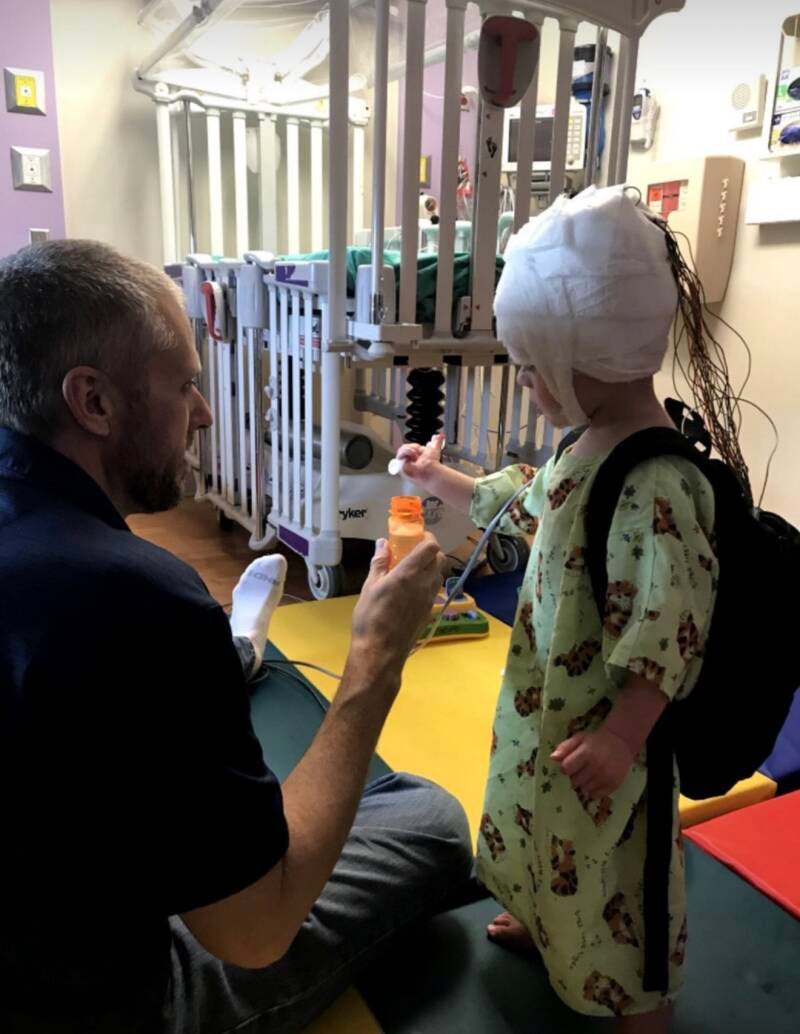
The first day is a little bit of a blur to me, but I remember Henry started the morning with an MRI. Following his MRI, he was hooked up to the EEG headgear he’d be wearing for the next 3 days. The days that followed were full of blood work, parental interviews/questionnaires, a strobing test, neurological psychological evaluations, medical keto training, and probably several other things I’ve forgotten. Henry had been through all these tests before, but everything about this testing was wildly different. There was an intensity to it. Weeks didn’t pass between tests. We weren’t tracking down results through portals, nurses, or administrative assistants. Henry’s epileptologist faithfully delivered new data every day of our stay. He spent as much time with us as we needed and patiently answered question after question. That week, Henry received his first diagnosis. He has an SCN1B genetic variant. I remember the doctor telling us, “This is a rare genetic variant, but it isn’t rare for me.” In that one sentence, he said everything I’d desperately needed to hear from a doctor. I needed a name for this monster Henry was battling, and we needed a doctor who knew exactly how we could fight it. He managed to give us a hard diagnosis but simultaneously armed us with the knowledge to combat it. He was experienced, confident, and devoted hours of patient education to our family. There were 2 improvements he made to Henry’s care plan immediately that changed the entire trajectory of Henry’s life. Blood results showed that Henry was being prescribed less than half of a therapeutic dose of anticonvulsants. He increased the appropriate medications and kept Henry in the hospital long enough to observe how he responded. The second change dealt with Henry’s rescue medicine. We had been taught by previous doctors to wait until Henry had been having a seizure for 5 minutes before administering rescue medication. This doctor explained that it’s difficult for a brain to respond to medication 5 minutes into a seizure and that we should begin administering rescue medication at the beginning of a seizure. Little did we know, these two small changes were the beginning of a new, healthier chapter in Henry’s story. Leading up to this SCN1B diagnosis, Henry had been admitted to the ER every month due to status epilepticus (seizure activity lasting longer than 5 minutes). Since making these changes to his care plan in 2021, Henry has been admitted to the ER twice. He still has seizures, but they have identifiable triggers and are fewer in number. We can manage the seizures at home, with occasional emergency calls for help to our EMTs and firefighters. This diagnostic program and doctor improved Henry’s life in a way I hadn’t dreamed was possible.
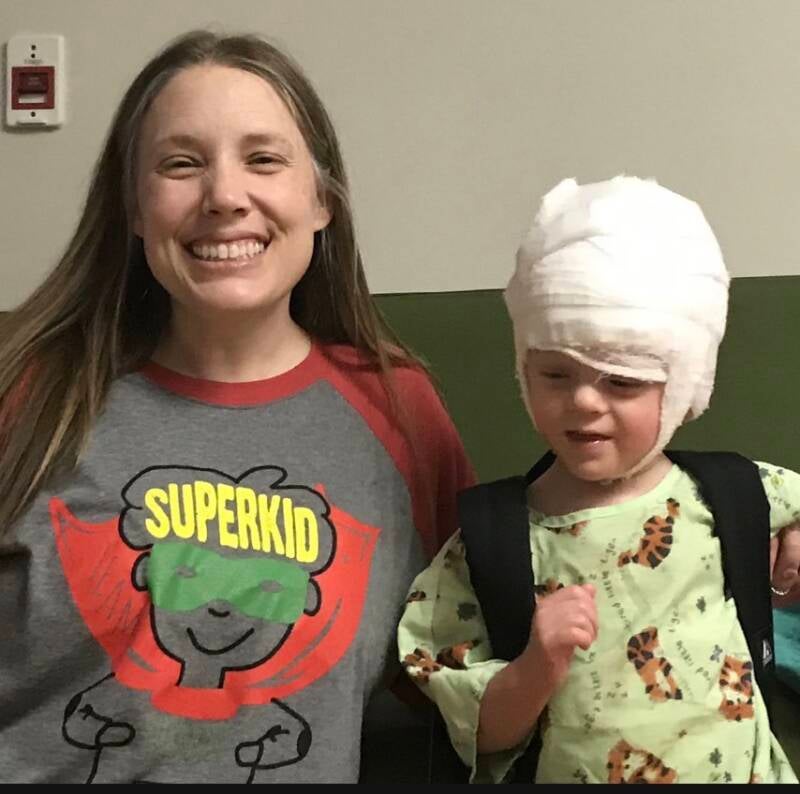
Steve and I have discussed how important it is to be genuine. While it’s truthful to say the dr and this diagnostic program were a blessing, it would be dishonest to say it felt like a week brimming with victories. I was grateful to finally have a diagnosis, but the diagnosis and the prognosis were hard. Still are. There were a lot of tears as we processed the grief that accompanied the loss of the life we imagined for Henry. Through that grief, the Lord was holding us. I understand why people describe the Heavenly Father as a masterful weaver...divinely interlacing people, places, and circumstances. A special hospital. A brilliant doctor. A patient to caregiver ratio one could only dream about. A clear diagnosis. Receiving that diagnosis alongside Steve. Each of these was a thread of mercy woven together in a small section of a much larger masterpiece pointing us towards Him.